Yard Drainage Bundaberg
Fix pooling water, soggy ground and poor yard drainage with practical solutions designed around the way water moves across your property.
Fixing Yard Drainage Problems at the Source
Water sitting in the yard after rain is usually a sign that the site is not draining effectively. The ground may fall towards a low point with no outlet, surface water may be trapped beside the house, or saturated soil may be holding moisture long after the rest of the property has dried.
A drainage solution should do more than put a pipe into the ground. It needs to work with the levels of the property, collect water where it naturally gathers and give it a clear path away from the problem area.
We install yard drainage systems across Bundaberg for established homes, new landscaping, side access areas, lawns and other residential spaces where water is not moving as it should.
Where the issue is part of a larger roofwater or property drainage system, we can also look at the broader
stormwater drainage requirements
rather than treating one wet section in isolation.
Signs Your Yard Needs Better Drainage
Some drainage problems are obvious immediately after heavy rain. Others show up as ground that stays wet for days, areas of lawn that continually deteriorate or water repeatedly collecting in exactly the same place.
Water Pooling Across the Lawn
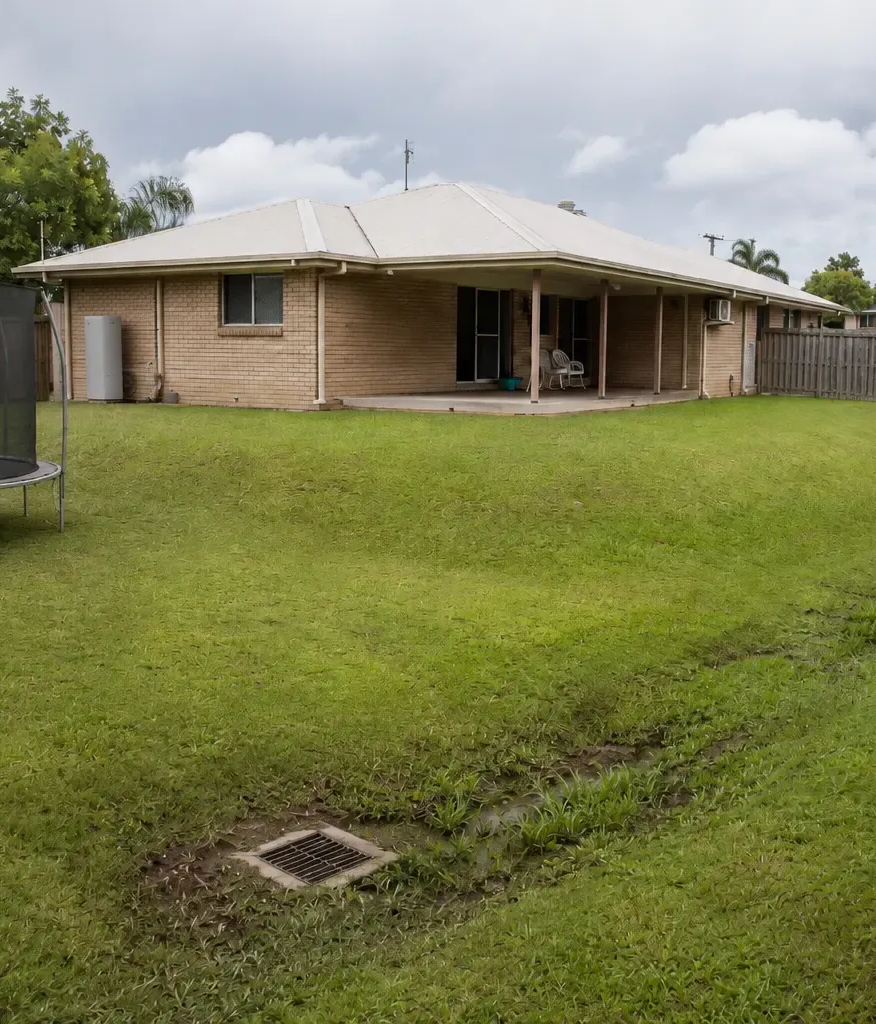
Low areas can hold surface water long after surrounding ground has drained. Correcting the fall, installing collection points or combining the two can provide the water with a proper escape path.
Boggy or Permanently Soft Ground
A yard does not need visible standing water to have a drainage problem. Constantly saturated soil, muddy patches and lawn that never properly dries can indicate that moisture is being trapped below the surface.
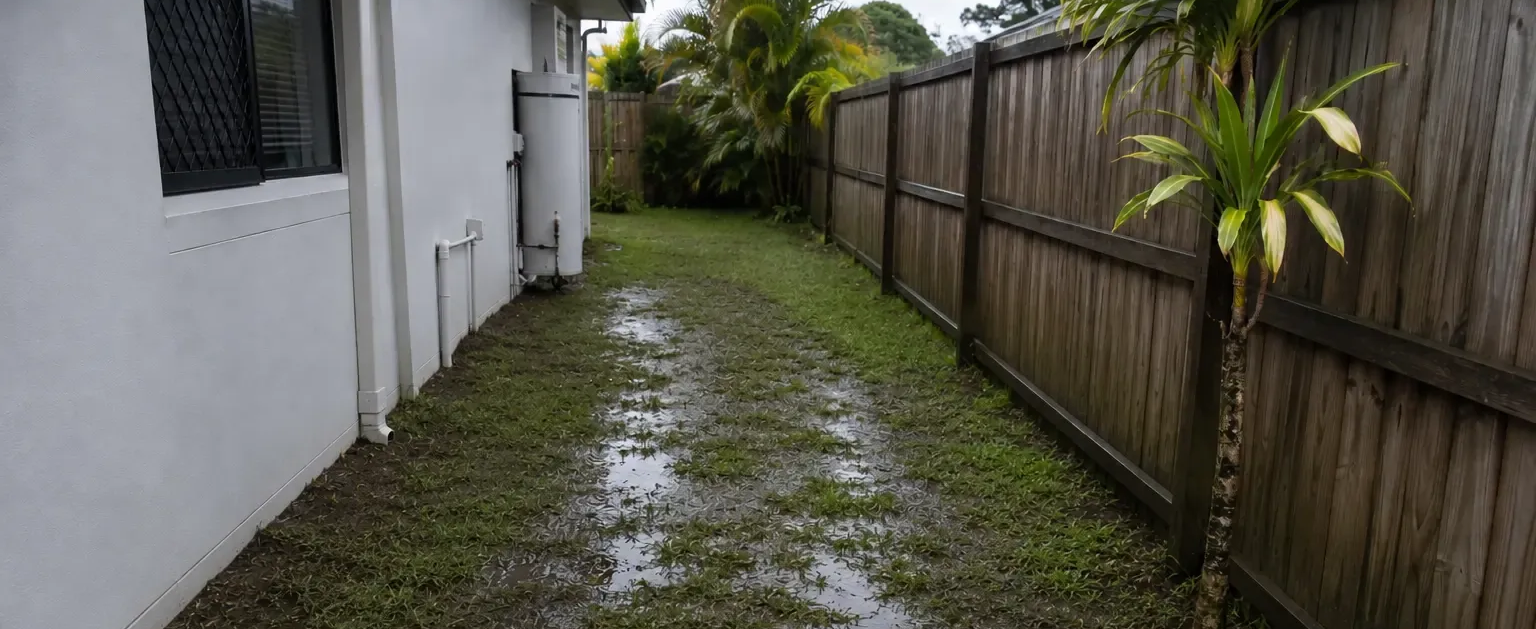
Water Pooling Beside the House
Narrow side passages and areas between the house and boundary fence can easily become natural low points. These areas may need reshaping, surface collection or subsurface drainage to move water through them.
Runoff From Higher Ground
Water naturally follows the fall of the property. Where a backyard, garden or neighbouring section sits higher, runoff can repeatedly travel towards the same lower section of the yard unless it is intercepted and redirected.
Poorly Drained Landscaping
Garden beds, retaining areas and landscaped sections can interrupt the original flow of water across a property. Drainage can be incorporated around these areas without turning the entire yard into a network of visible drains.
Water Trapped Between Finished Areas
Concrete, sheds, patios and other improvements can change how water moves around an established property. A section that previously drained naturally may begin collecting water once the surrounding levels or surfaces change.
Practical Ways to Improve Water Flow Around Your Property
There is no advantage in installing more drainage than the site needs. The goal is to identify why the water is collecting and use the simplest effective combination of surface levels, collection points and underground drainage.
Surface Grading & Reshaping
Sometimes the main problem is the ground itself. Small changes to the fall of a lawn or soil area can stop water settling into a low point and guide it towards a location where it can be collected or discharged.
This can be particularly effective where previous landscaping, soil movement or property improvements have created an isolated depression.
Agricultural & Subsurface Drains
Ag drains can collect moisture travelling through saturated ground and provide a controlled path away from persistently wet areas.
They are most effective for subsurface water. Where rain is visibly ponding on top of the ground, an ag drain alone is often not the right solution and should be combined with better surface fall or dedicated collection points.
Grated Pits & Surface Collection
Grated pits collect water from low points before transferring it into underground pipework. They are useful where water naturally converges into a defined section of lawn, garden or side access.
Correct placement is important. A pit installed away from the actual low point will leave much of the original problem unchanged.
Swales & Open Surface Drainage
Not every property requires underground pipework. A shallow swale or deliberately shaped surface can move runoff across larger open areas while keeping the drainage system simple and accessible.
These solutions are particularly useful where the property has enough space and natural fall to move water without relying entirely on buried infrastructure.
Side-Yard Drainage
Restricted side access often requires a more targeted solution because there may be very little room to alter ground levels.
Depending on the site, drainage may use grated collection points, narrow surface drains, underground pipework or subsurface drainage to move water away from the low section.
Combined Drainage Systems
Some yards have both surface water and saturated ground, so one type of drain may not solve the whole problem.
Combining grading, pits, underground pipework and ag drainage allows each part of the system to manage a different source of water.
Collecting Water Is Only Half the Job
A drainage system is only useful if the collected water has a suitable path away from the problem area.
Before installing drainage, the fall across the property and the available outlet need to be considered together. This determines where pits should sit, which direction underground pipes should run and whether enough natural fall exists for the proposed layout.
Installing a drain into the lowest part of the yard without first working out where that water will go can simply replace visible pooling with a buried drainage problem.
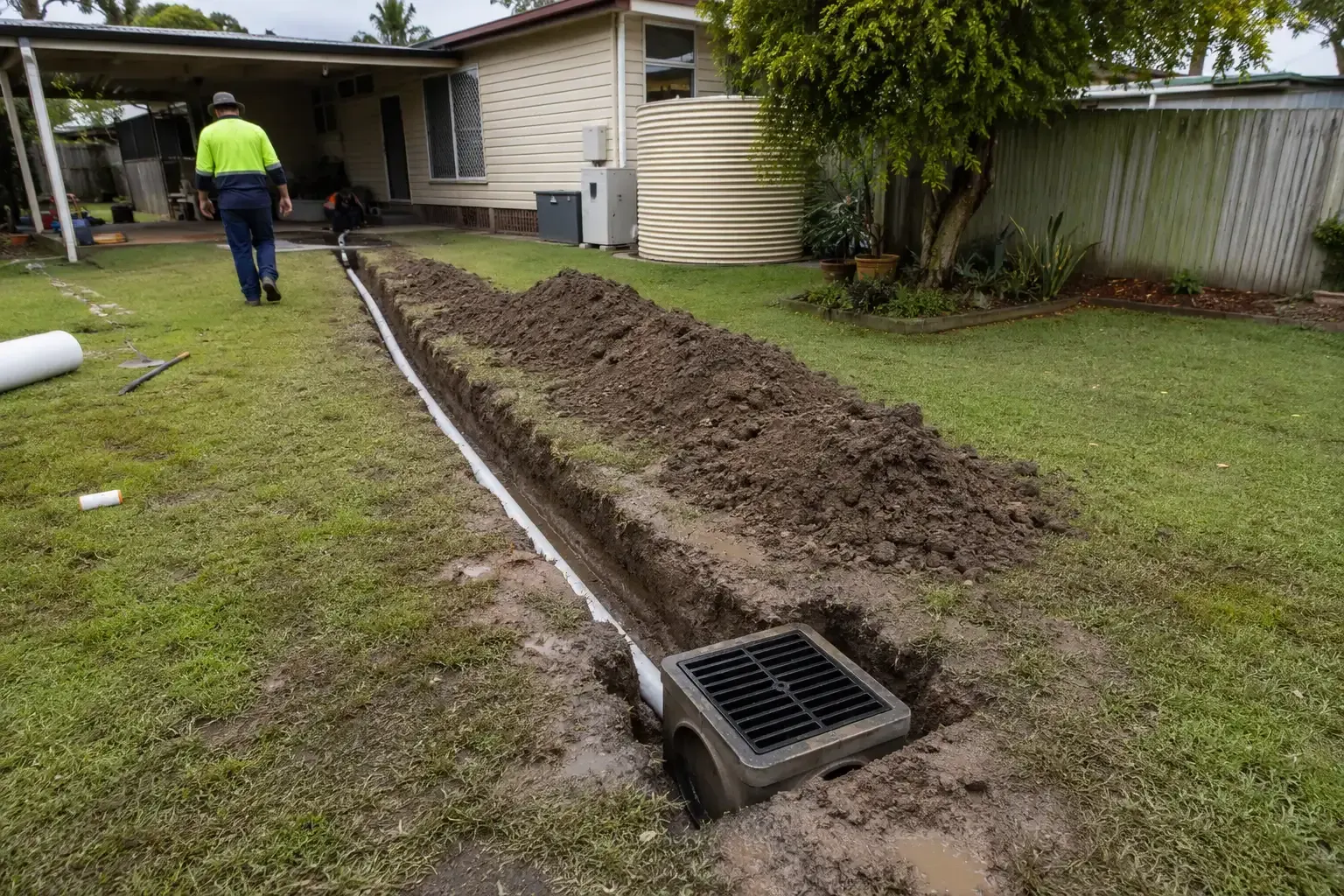
For properties requiring longer underground runs, excavation or new drainage lines between different parts of the site, our trenching and drain installation service covers the excavation and pipe installation side of the work as well.
Start With the Water, Not the Drain
Good drainage design begins by understanding where the water is coming from, where it collects and where it can realistically be moved.
1. Identify the Problem Area
We look at the sections that remain wet or collect water and work back from there so that we can determine how water is reaching them.
2. Check the Fall of the Property
Existing ground levels help determine whether surface reshaping is enough or whether pits, pipework or subsurface drainage will be required.
3. Choose the Right Method
Surface runoff and saturated ground behave differently, so in most instances they will require different drainage methods.
4. Create a Clear Drainage Path
Once collected, the water needs a continuous route away from the wet area with suitable fall through the drainage line to keep the water moving.
The result should be a system that makes sense for the property rather than a collection of drains installed wherever water happened to be visible.
Drainage Solutions for Bundaberg Properties
Every property handles rain differently. Block levels, previous earthworks, landscaping, neighbouring ground, sheds, concrete areas and additions to the home can all change the direction water takes through a yard.
That is why we focus first on the layout of the individual site rather than assuming the same drainage system will work everywhere.
We provide residential yard drainage throughout Bundaberg and surrounding areas, from small localised wet spots to larger properties where water needs to be intercepted and redirected across a longer distance.
For work outside the immediate residential setting, including paddocks, access areas and larger property water-control projects, see our rural drainage and property water control service.
Yard Drainage Questions
What is the best drainage for water pooling in a lawn?
For visible surface water, the most effective solution is usually to improve the surface fall, install a correctly positioned grated pit, or use both. An ag drain on its own is generally better suited to water within saturated soil than water already sitting on top of the lawn.
Will an ag drain stop my yard from flooding?
Not if the main problem is surface runoff. Ag drains are designed to collect water moving through the ground. If rainwater is flowing across the surface or forming a visible pool, it normally needs a surface collection or grading solution as well.
Can you fix a yard that stays boggy for days after rain?
Yes. Persistently wet ground can often be improved with subsurface drainage, reshaping of the affected area or a combination of both. The important first step is determining whether the moisture is entering from the surface or remaining trapped within the soil.
Can yard drainage be connected to an existing stormwater system?
Yes, where there is a suitable existing connection and the system can accept the additional drainage. Where there is no appropriate connection point, the drainage layout needs to be designed around the available fall and discharge options on the property.
Will filling a low section of lawn fix the drainage problem?
Only if the new levels give the water somewhere suitable to flow. Simply adding soil to a low point without considering surrounding levels often moves the water somewhere else rather than solving the drainage issue.
Can you install drainage down a narrow side of a house?
Yes. Side-yard drainage is a common application for grated pits, narrow surface drains, underground pipework and ag drainage. The solution depends mainly on the available width, ground levels and where the collected water can be directed.
Do I need to redo my whole yard to fix drainage?
Usually not. Localised drainage problems can often be corrected with targeted grading, a pit, a drainage line or subsurface drainage. More extensive reshaping is generally only required when the levels across a larger section of the property are contributing to the problem.
Improving Drainage Without Rebuilding the Whole Yard
Many yard drainage problems can be corrected with targeted work rather than completely regrading the property.
A persistent low point may only require a new collection pit and drainage line. A boggy strip may need subsurface drainage. An area where water is moving in the wrong direction may be improved by reshaping a relatively small section of ground.
Where several problems are connected, a broader solution may make more sense. For example, water collecting in a backyard, travelling down a side passage and then pooling beside a driveway should be looked at as one water-flow problem rather than three unrelated wet spots.
If the final problem occurs around the vehicle access itself, including water crossing or sitting on the driveway, our driveway drainage and culvert solutions cover that area separately.
Fix the Wet Areas in Your Yard
If water keeps pooling, the lawn stays boggy or runoff is travelling through the wrong part of your property, we can help work out a practical drainage solution.
Call, message or request a quote below for yard drainage in Bundaberg.