Drainage Trenching & Pipe Installation Bundaberg
Clean, accurately graded trenching for stormwater pipes, drainage lines, pits and underground water management systems across Bundaberg.
Drainage Pipes Need the Right Route, Depth and Fall
Putting a pipe underground is only useful if water can actually move through it.
Drainage trenching needs to account for where the water is coming from, where it needs to go and the levels available between those two points. The trench then needs to follow the required route while allowing enough fall, suitable pipe cover and practical access for pits, connections and future maintenance.
At Bundaberg Drainage, our trenching work is focused specifically on drainage infrastructure. We excavate and prepare trenches for new drainage lines, replacement pipes, stormwater connections and other underground components needed to move water around a property.
The aim is not simply to dig a trench quickly. It is to create a reliable underground route that allows the drainage system installed within it to work properly once everything is backfilled.
Underground Drainage Work for Residential and Rural Properties
Stormwater Pipe Runs
We excavate trenches and install underground pipe runs used to carry collected stormwater towards an appropriate outlet or discharge point. This can include new installations as well as replacing poorly positioned, damaged or inadequate existing lines.
For full property stormwater systems involving collection points, pits and runoff management, see our
Stormwater Drainage page for more information.
Downpipe Drainage Lines
Roof water needs somewhere to go once it reaches ground level. We can excavate and install sub-surface drainage runs to carry excess water away from downpipes rather than allowing it to discharge directly beside the building.
This is particularly useful where several downpipes need to be connected into a larger property drainage layout to efficiently move more water.
Drainage Pits & Connections
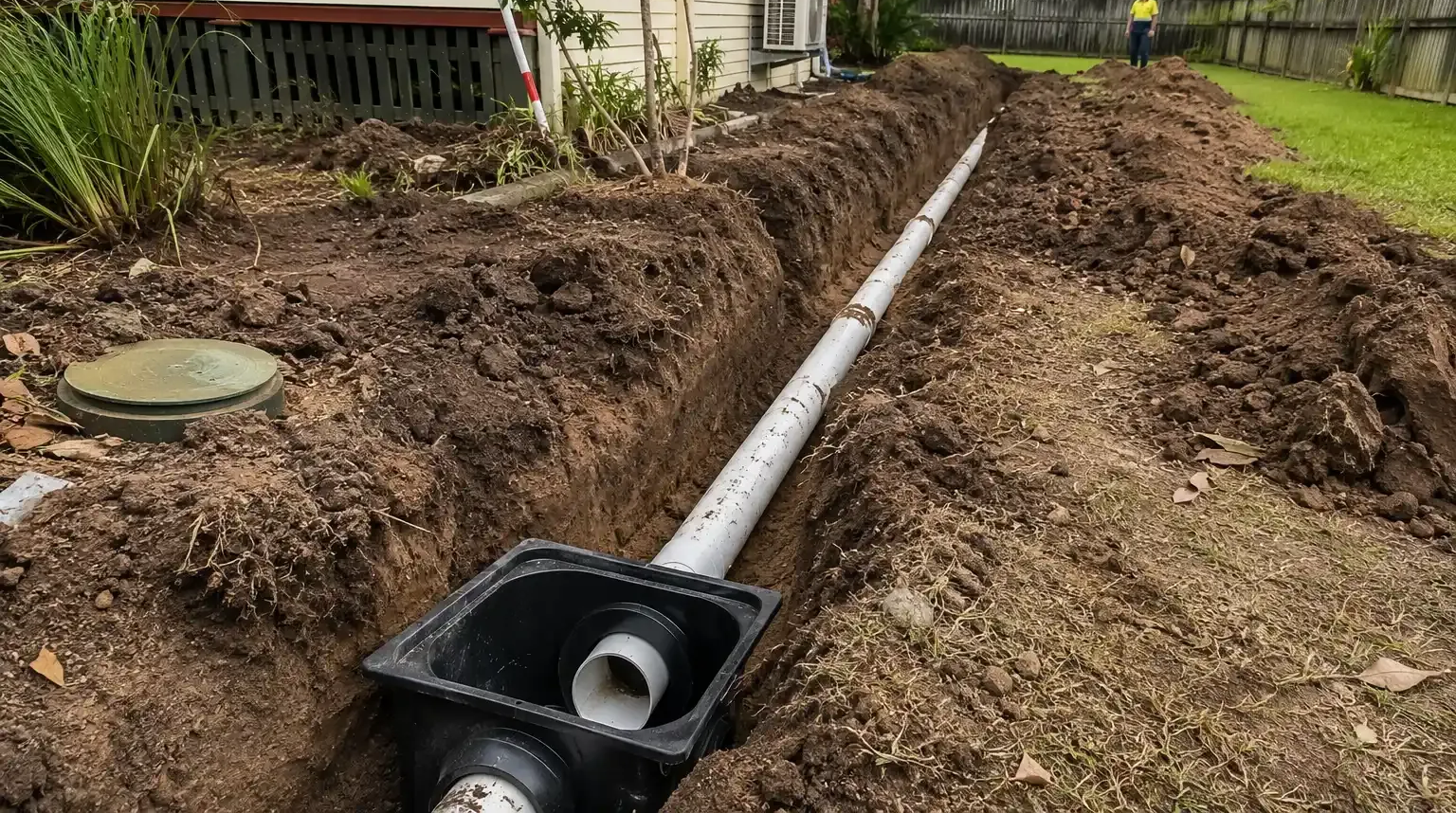
Underground drainage often requires more than a continuous length of pipe. Trenches can be prepared around drainage pits, junctions and connection points so water can be collected, redirected or carried between different sections of the property.
Correct levels are particularly important around these points because a poorly positioned pit or connection can restrict the entire drainage run.
New or Upgraded Systems
Older drainage lines can become damaged, blocked, crushed or simply prove inadequate for the amount of water they need to handle.
Where replacement is the sensible option, the affected line can be excavated and a new drainage run installed.
We can also redesign and upgrade existing routes where the original drainage layout is inadequate and contributing to ongoing water problems.
Working Out Where the Drain Needs to Go
A good trench route is usually the result of planning above ground before excavation starts.
We look at the source of the water, the proposed collection points, the intended outlet and the levels between them. The route also needs to work around buildings, driveways, fences, gardens and other permanent features wherever practical.
Key considerations include:
- The fall available along the proposed drainage run
- The depth required to protect the installed pipe
- The location of pits and connection points
- Existing underground services that need to be identified before excavation
- Access for machinery and excavation equipment
- Changes in ground level across the property
- The most practical route to the intended outlet
- Areas that need to remain accessible after the work is complete
Sometimes the shortest route is the best one. In other situations, a slightly longer run provides better levels, easier access or avoids unnecessary disturbance to established areas.
This planning is also why trenching is so often a part of most yard drainage or stormwater projects rather than an isolated excavation job.
From Excavation to Backfilling
1. Assess the Drainage Route
We establish what the new underground line needs to achieve and identify a practical route between the collection area and the intended outlet or connection point.
2. Excavate the Trench
The trench is excavated to the required alignment and depth, with levels established to provide the fall needed for the drainage line.
3. Install Pipes, Pits & Connections
The drainage infrastructure is positioned and connected through the prepared trench. Levels and connections are checked before the line is covered.
4. Backfill & Reinstate the Work Area
Once the underground work is complete, the trench is backfilled and the excavated area is tidied. Some visible ground disturbance is unavoidable.
Trenching Is Not Just for New Builds
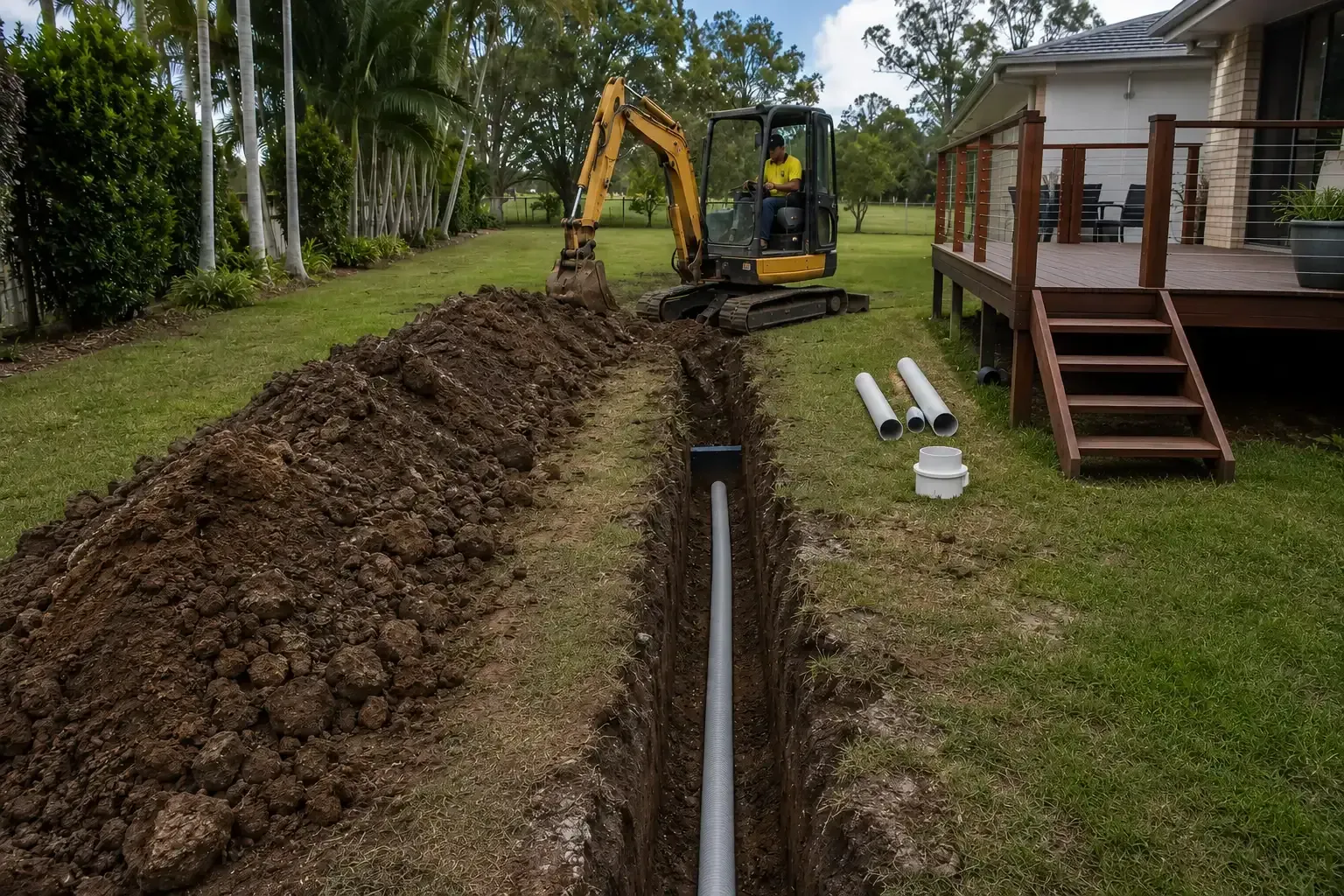
A large amount of drainage trenching is carried out on established properties.
A home may have downpipes that discharge beside the building, an old underground line that no longer works properly, or a drainage layout that was never adequate for the way water now moves across the site.
Excavation can provide access to those existing systems so sections can be replaced, extended or rerouted.
New trenching may also be required when other drainage improvements are being added around the property. A new pit, surface inlet or yard drainage system still needs a reliable way of carrying the collected water away.
Different Drainage Problems Need Different Underground Work
Trenching supports several of the drainage services we provide, but each system has a different job.
Surface water collecting around lawns, buildings and low areas may require pits, drains or underground pipework to move that water elsewhere.
Roof runoff and collected surface water often need underground pipe networks connecting downpipes, pits and discharge points.
Where the problem is saturated soil or groundwater within the ground itself, a purpose-built subsurface drainage system may be required.
Driveways may require underground pipes, culverts or drainage crossings where water needs to pass beneath an access point.
Drainage Trenching FAQs
How deep do drainage trenches need to be?
There is no single standard depth for every drainage trench. The required depth is established from the pipe fall, outlet level, ground levels and the amount of cover the installed line needs.
The important point is maintaining a workable drainage grade rather than simply digging the trench as deep as possible.
Does a drainage pipe need to slope the whole way?
Gravity drainage lines generally need continuous fall towards their outlet. Flat sections and unintended low points can hold water and sediment and reduce the performance of the line, so levels should be established before the trench is backfilled.
Will trenching damage my lawn?
Yes. Any trench excavated through an established lawn will temporarily disturb that strip of ground.
The trench can be backfilled and tidied after installation, but soil settlement and lawn recovery should be expected following underground works.
Can you replace an existing underground drainage pipe?
Yes. Existing drainage runs can be excavated where access allows, with damaged or poorly performing sections removed and replaced. In some cases, rerouting the line provides a better result than following an ineffective original layout.
Can trenching be used to connect several downpipes together?
Yes. Multiple downpipes can feed into an underground stormwater drainage network where the layout and outlet allow it. The pipe route and levels need to be planned so the combined system can move water effectively.
Do you provide general electrical or utility trenching?
Our focus is drainage-related trenching and underground drainage installation.
The service is intended for stormwater pipes, drainage lines, pits, outlets and associated water-management work rather than general-purpose utility trenching.
Drainage Runs Across More Than Just Suburban Yards
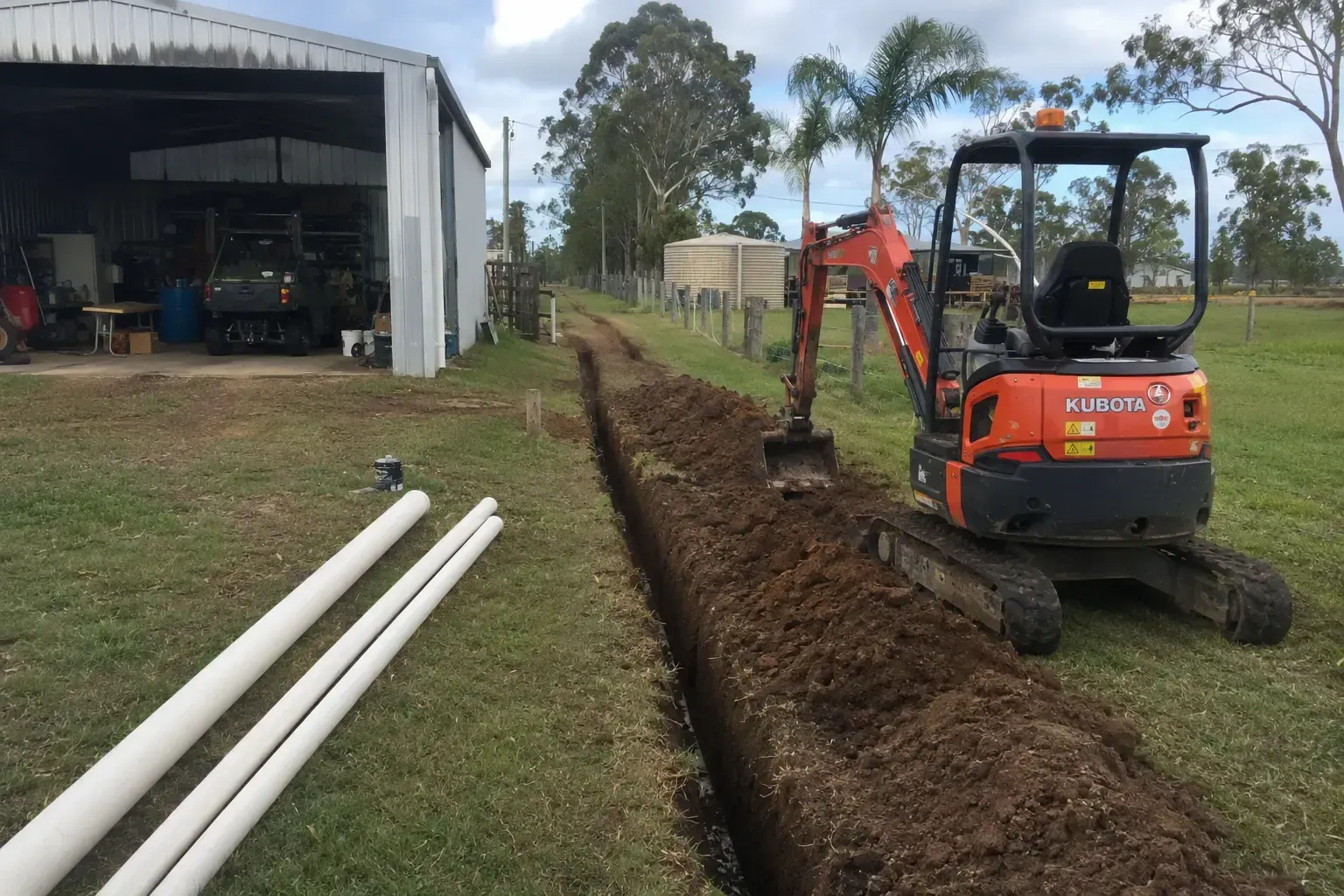
Underground drainage lines are also common on larger blocks, acreage properties and farms where water needs to travel much greater distances.
Longer pipe runs can be used to connect sheds, tanks, roof drainage, collection areas or low points back into a wider property drainage system. Larger sites also provide different challenges, including longer falls, changing ground levels and managing runoff across multiple areas.
Need Drainage Trenches or Underground Pipework Installed?
Whether you are installing a new drainage line, replacing an existing pipe or adding underground infrastructure as part of a larger drainage project, Bundaberg Drainage can help.
Call, message or request a quote to discuss drainage trenching and pipe installation for your Bundaberg property.