Stormwater Drainage Bundaberg
Stormwater drainage systems for homes, sheds, driveways and properties across Bundaberg, including pits, grates, channel drains and underground pipework.
Stormwater Drainage That Gets Water Where It Needs to Go
A good stormwater system does more than put a drain at the lowest point of the yard. The collection points, pipe sizes, levels and outlet all need to work together so water can enter the system and continue moving away from the areas you want to keep dry.
Bundaberg Drainage installs stormwater drainage for existing homes, new outdoor areas, sheds, driveways and larger properties. Depending on the site, this can include grated pits, channel drains, underground stormwater lines and connections between multiple collection points.
We can also work stormwater drainage into broader yard drainage solutions where both surface levels and underground infrastructure need to be addressed.
Stormwater Drainage We Install
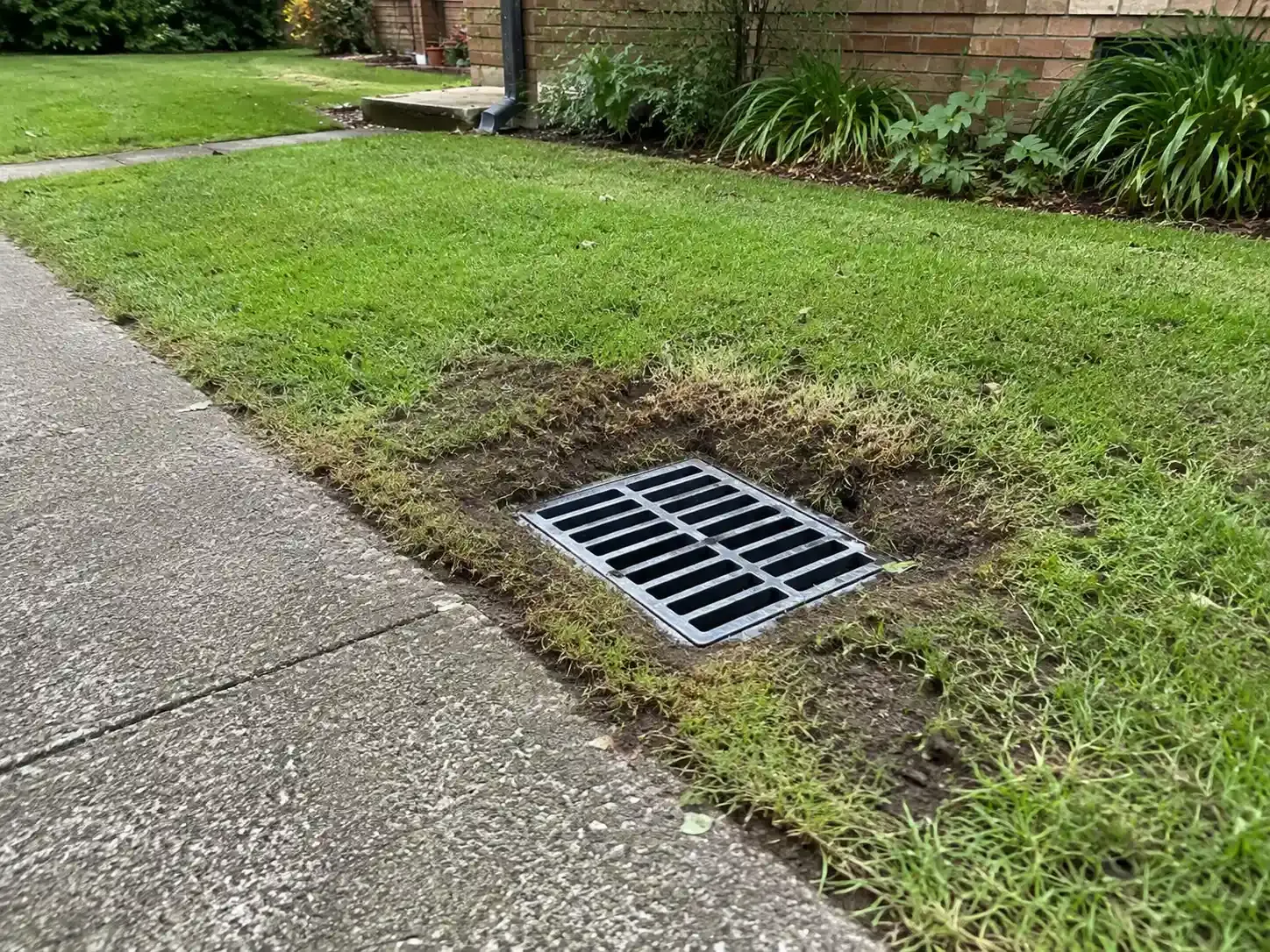
Effective stormwater drainage starts with collecting runoff in the right places and moving it through a system that suits the property. Different areas may need different collection methods depending on where the water is coming from and how it moves across the site.
The systems below can be used individually or combined to manage roof water, paved-area runoff and concentrated surface flow around homes, sheds, driveways and other developed areas.
Stormwater Pits & Grates
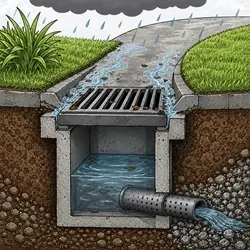
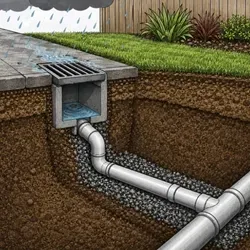
Grated pits collect surface runoff before directing it into underground pipework. They can be positioned beside paved areas, around sheds, at low points or anywhere concentrated runoff needs a defined entry into the drainage system.
Correct positioning is important. A pit that sits too high, is undersized for the area or is installed without suitable falls may still leave water sitting around it.
Channel & Strip Drains
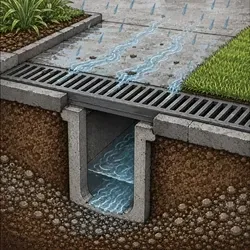
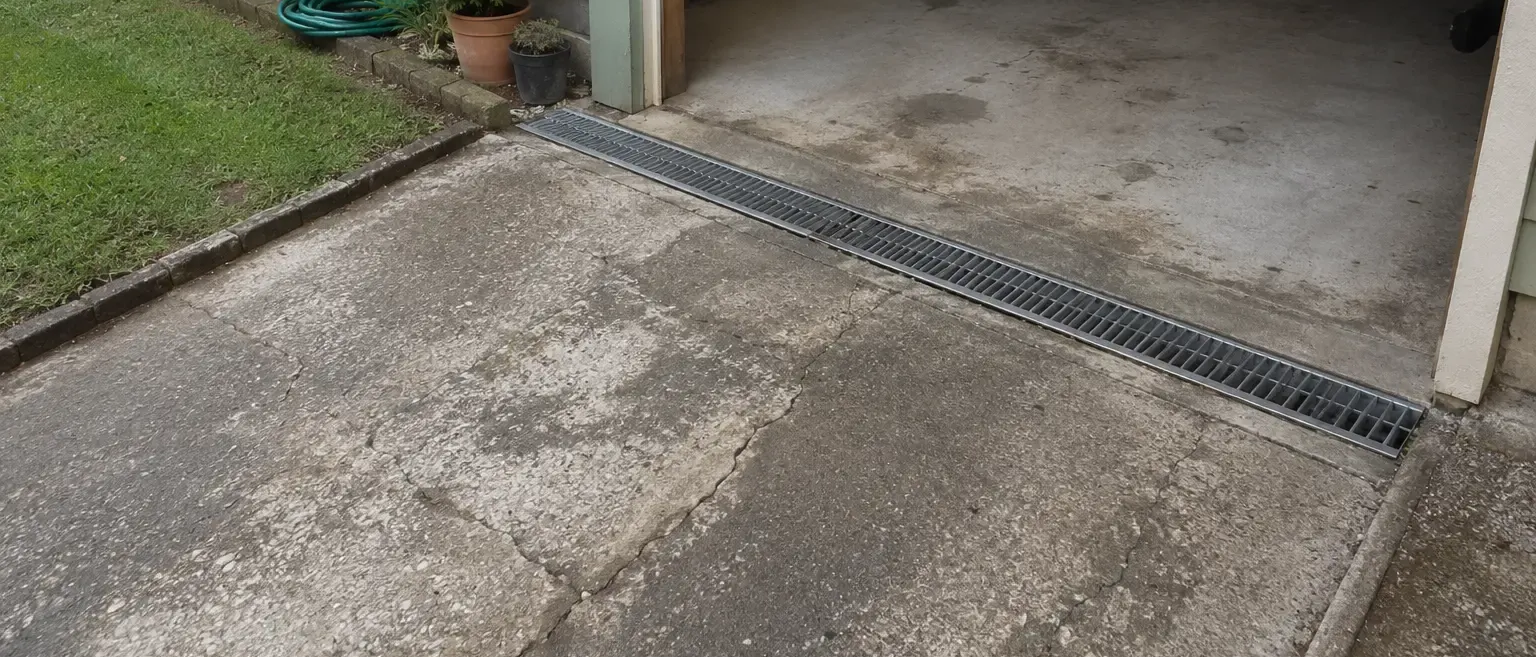
Linear channel drains are useful where runoff needs to be intercepted across a wider area rather than at one individual pit. Common locations include driveways, garage approaches, shed entrances, patios and other concrete or paved surfaces.
They provide a defined collection line and can be connected into underground stormwater pipework to carry the collected water away.
Underground Pipework
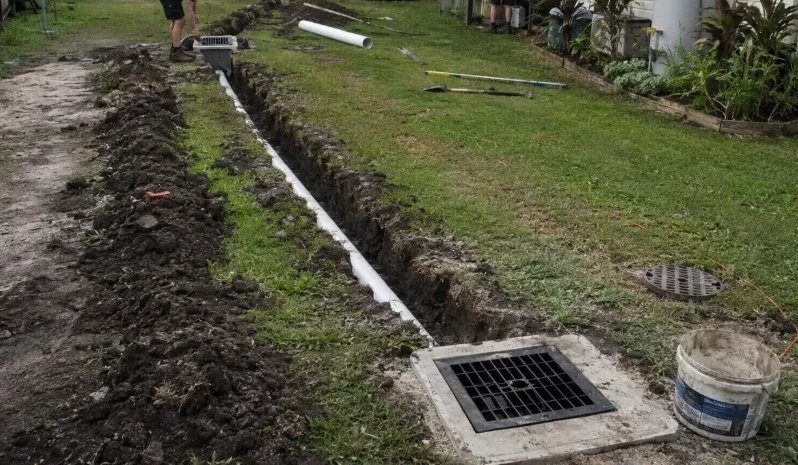
Stormwater pipes connect pits, channel drains and other collection points to an appropriate discharge location. We install new underground drainage runs and can add pipework when an existing property does not have enough drainage infrastructure.
Our
drainage trenching and pipe installation page covers the excavation and installation work needed to establish the new line.
Additional Collection Points
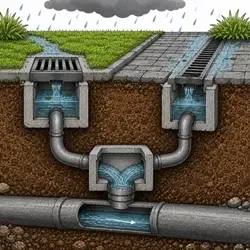
One drain is not always enough. Larger paved areas, sheds or properties with several separate low points may require additional pits or drains connected into the same system. All options will be considered to achieve the best outcome for each scenario.
The aim is to intercept runoff where it naturally concentrates rather than expecting water from the entire property to find its way to a single drain.
Where Stormwater Drainage Can Make a Difference
Stormwater problems are often most noticeable during a short period of heavy rain. Water can move quickly off roofs, concrete and compacted areas, exposing drainage problems that are barely noticeable in lighter weather.
A new or improved stormwater system may be useful where you regularly see:
- Water collecting around sheds, garages or concrete slabs
- Runoff crossing driveways, paths or entertaining areas
- Existing pits overflowing before surrounding areas have drained
- Large paved areas with nowhere for runoff to be collected
- Water concentrating at one low point beside the house or yard
- Several existing drains that are not properly connected
- New concrete, sheds or landscaping that have changed the way water moves across the property
Where the main problem is water sitting across open lawn or naturally low ground rather than missing stormwater infrastructure, our yard drainage and water flow solutions page covers that work in more detail.
Stormwater Drainage Around Driveways, Sheds & Hard Surfaces
Concrete, roofs and other hard surfaces create concentrated runoff because very little water can soak directly into the ground. That makes drainage around these areas particularly important.
A channel drain may be used to intercept water running across a driveway or towards a garage, while grated pits can collect runoff beside sheds, paths or larger concrete areas. These collection points can then be linked with underground pipework to move the water away.
For problems specifically involving driveway runoff, table drains, crossings or culverts, see our driveway drainage and culverts page.
Planning the Whole Stormwater System
Installing a grate where water pools is only one part of the job. Before drainage is installed, we look at where the runoff is coming from, where it naturally concentrates and how it can be moved through the property.
1. Identify the Water Flow
We first assess the current flow to establish which areas are contributing runoff and where the water is currently travelling or collecting.
2. Choose the Collection Points
Pits, grates or channel drains are positioned where they can actually intercept the water, rather than simply where they are easiest to install.
3. Establish the Pipe Route
The underground pipework needs a workable route between the collection points and the intended discharge area while maintaining suitable fall.
4. Install & Reinstate
Once completed, the surrounding ground is reinstated as neatly as possible so the finished drainage becomes part of the property rather than an eyesore.
Stormwater Drainage, Yard Drainage or a French Drain?
These services solve different parts of a drainage problem, and some properties need a combination of them.
Stormwater drainage deals primarily with collected surface runoff using infrastructure such as grated pits, channel drains and underground pipes.
Yard drainage deals more broadly with how water moves and pools across the property. This may involve changing surface falls, creating collection points or combining several drainage methods.
French drains and subsoil drainage are designed to intercept water moving through saturated ground rather than simply collecting runoff from the surface.
Stormwater Drainage FAQs
What is a stormwater drainage system?
A stormwater drainage system collects rainwater runoff and carries it away through a combination of pits, grates, channel drains and underground pipework. The exact layout depends on where the runoff is coming from and where it needs to be collected.
Can you add stormwater drainage to an existing property?
Yes. New stormwater pits, channel drains and underground pipes can be installed at established homes, sheds and properties. This is common where the original drainage is inadequate or new concrete, landscaping or structures have changed the way water moves across the site.
Do I need a pit or a channel drain?
Use a pit where water naturally concentrates at a particular low point. A channel drain is generally better where runoff needs to be intercepted across a wider line, such as across a driveway, garage entrance or edge of a concrete area. Some systems use both.
Can you connect several stormwater pits together?
Yes. Multiple pits and drains can be connected through underground stormwater pipework so separate parts of the property feed into one coordinated drainage system.
Will a stormwater drain fix a waterlogged lawn?
Not always. Stormwater pits work best when surface water can flow towards them. If the ground itself remains saturated or water is moving through the soil, French or subsoil drainage may be more appropriate.
Can you install stormwater drainage around a shed?
Yes. Grated pits, channel drains and underground pipework can be installed around sheds and workshops to collect runoff from surrounding hard surfaces and low areas before it builds up beside the slab or entrance.
New Drainage for Existing Bundaberg Properties
Stormwater drainage does not have to be installed when a property is first built. New pits, channel drains and underground drainage lines can often be added to established homes and properties where the original drainage is inadequate or the site has changed over time.
New sheds, extensions, concrete areas, driveways and landscaping can all alter where runoff travels. In some cases the existing drainage system simply no longer collects water from the areas that now need it.
Bundaberg Drainage installs stormwater drainage throughout Bundaberg and surrounding areas, with more details around our coverage listed on our Bundaberg drainage service areas page. Click below for more info...
Need Better Stormwater Drainage?
If runoff is collecting around your home, shed, driveway or outdoor areas, Bundaberg Drainage can install a stormwater system designed around the way water actually moves across your property.
Call, message or request a quote via the form below for stormwater drainage in Bundaberg.