Driveway Drainage & Culverts BUNDABERG
Practical driveway drainage and culvert installation across Bundaberg, designed to manage runoff, prevent washouts and keep entrances usable.
Stop Water From Taking Over Your Driveway
A driveway often becomes the natural path for water when there is nowhere better for it to go.
Water may run down the driveway toward the house, cross the entrance during heavy rain, collect beside the driveway or repeatedly wash gravel away from the same low section. On properties with roadside drains or table drains, an undersized, blocked or damaged culvert can cause similar problems.
The right fix is not simply adding more gravel every time damage occurs. The aim is to give water a controlled path around, beside or underneath the driveway while keeping the access usable.
Bundaberg Drainage provides driveway-specific drainage solutions for residential, acreage and rural properties across the region.
We get water moving where it should, while keeping driveways, property entrances and rural access tracks safer, drier and easier to use.
Driveway Drainage Problems We Can Help With
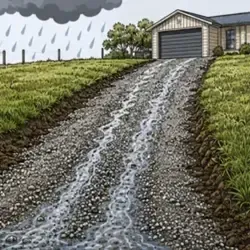
Water Running Down the Driveway
Long or sloping driveways can collect runoff from a surprisingly large area. Once the driveway starts acting like a drain, water can scour gravel, expose the base and carry sediment toward garages, sheds or lower parts of the property.
We can intercept or redirect this flow before ongoing runoff causes further damage.
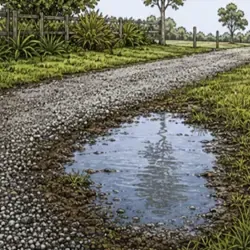
Water Pooling Beside Driveways
Low spots beside a driveway can remain wet well after surrounding ground has dried. Apart from making the area messy, repeated saturation can soften driveway edges and gradually affect the stability of the access.
The drainage needs to move water away without simply transferring the problem to another part of the yard.
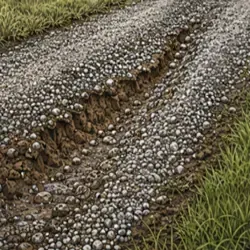
Washed-Out Gravel & Road Base
Repeated channels, deep ruts, loose gravel and regular wash-outs are often signs that water movement is the underlying problem.
Correcting the water flow before repairing the driveway gives the new gravel or road base a much better chance of staying in place.
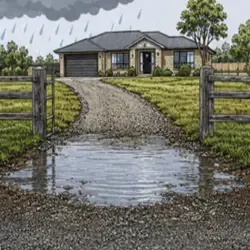
Flooded or Restricted Driveway Entrances
Where a driveway crosses an existing roadside drain or table drain, water still needs a clear path to pass underneath without disrupting the access.
A damaged, blocked, badly positioned or undersized culvert can restrict that flow and cause water to back up around the entrance.
Driveway Drainage Solutions
Every driveway handles water differently, so the drainage layout should suit the direction of flow, driveway levels and where the water can safely discharge.
Common solutions include:
Driveway Culverts
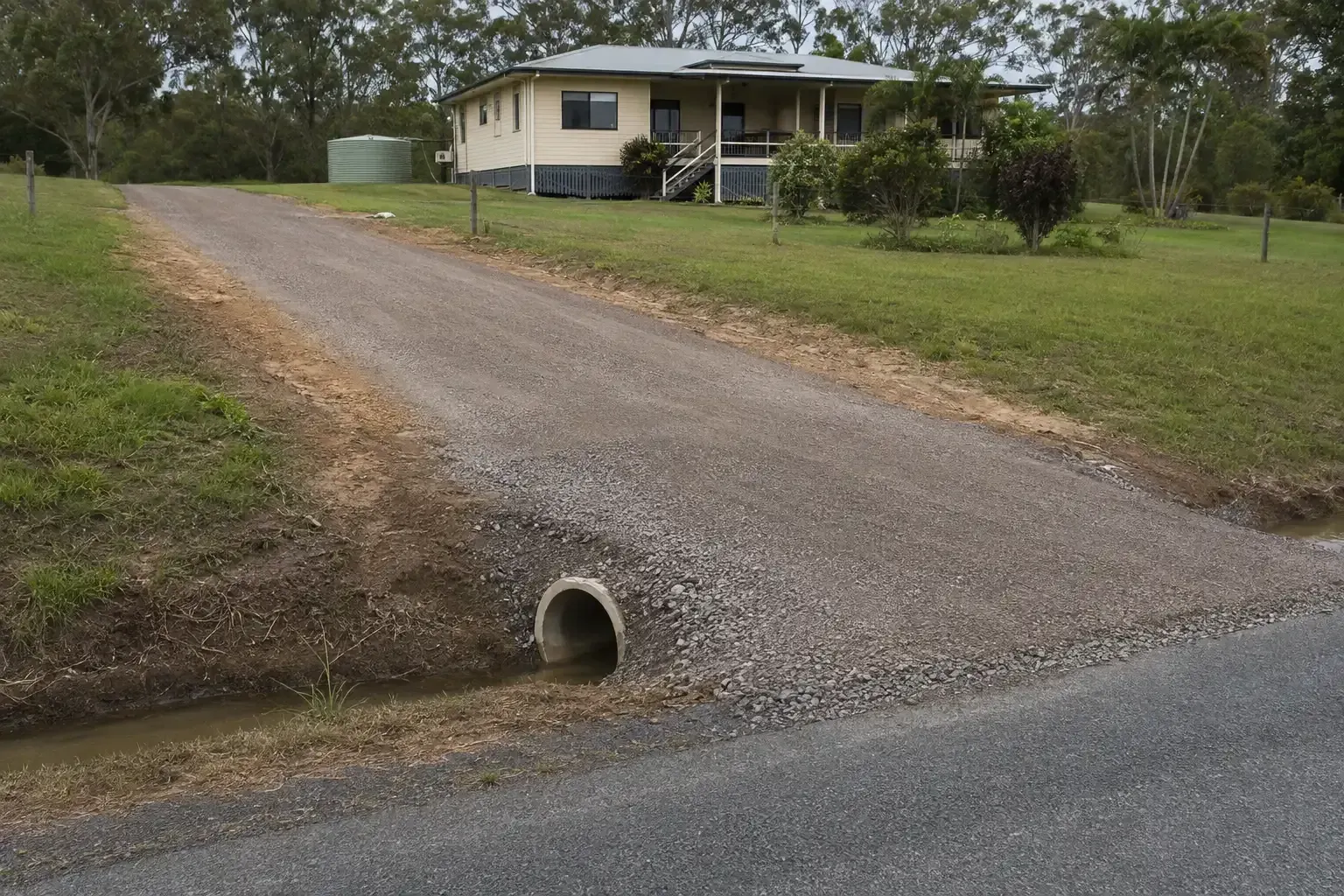
Culverts allow water from roadside or property drains to continue underneath a driveway without cutting off vehicle access.
We can install new culverts as part of a driveway entrance or replace existing culverts that are damaged, poorly positioned or no longer working effectively.
The pipe needs to be set at an appropriate level and fall so water can move through freely, with the surrounding driveway material rebuilt to provide a stable crossing.
Grated Channel Drains
A grated channel drain can intercept surface water where it crosses a driveway or approaches a garage, carport or other built area.
Rather than allowing runoff to continue over the surface, the channel collects the water across the width of the flow and directs it toward an appropriate outlet.
For more info on stormwater collection around the home, see our stormwater drainage services.
Driveway Side Drains
Shallow drains or formed drainage lines beside a driveway can prevent runoff from repeatedly travelling across the driving surface.
They are particularly useful where surrounding ground naturally directs water toward the driveway or where runoff follows a long access track.
Runoff Diversion & Driveway Reshaping
Sometimes the problem is the driveway level itself.
Minor changes to falls, crossfalls or surrounding ground can help guide water away from the driveway before it gains enough volume or speed to cause erosion.
Where excavation or new underground drainage lines are required, our drainage trenching and pipe installation services can be incorporated into the job.
Culvert Installation & Replacement
A driveway culvert has a fairly simple job: allow water to pass underneath the driveway while vehicles continue over the top.
Getting that simple job right depends on more than putting a pipe in a trench.
The culvert needs to follow the drainage line, maintain adequate fall and remain open at both ends. The driveway crossing then needs suitable cover and compaction so traffic does not damage the pipe or cause the surrounding material to settle prematurely.
Culvert work may include:
- New driveway entrance culvert installation
- Replacement of damaged or collapsed culverts
- Repositioning poorly aligned culverts
- Excavation and bedding for new pipe
- Reinstatement of gravel driveway crossings
- Improving water entry and discharge around the culvert
- Connecting the culvert with existing table or property drains
Where drainage extends well beyond the driveway and forms part of a larger acreage water-management system, our rural and acreage drainage page covers those broader projects.
Fix the Water Problem Before Repairing the Driveway
Replacing washed-away gravel without correcting the drainage usually treats the symptom rather than the cause.
If water continues following the same route, freshly placed material can begin moving again during the next period of heavy rain.
A better sequence is:
1. Identify Where the Water is Coming From
We look at the direction that the runoff approaches the driveway and where it currently travels.
2. Establish Where the Water Should Go
The proposed drainage needs a workable outlet rather than simply shifting water from one low spot to another.
3. Install, Repair or Replace the Drainage
This may involve a culvert, channel drain, side drain, pipework or changes to driveway levels.
4. Reinstate Any Disturbed Driveway Areas
Once the water has a controlled route, excavated or damaged sections of the driveway can be rebuilt.
If the underlying issue is water collecting throughout the backyard rather than specifically around the driveway, our yard drainage and water flow solutions cover the wider property problem.
Residential, Acreage & Rural Driveway Drainage
Driveway drainage is not limited to one type of property.
Residential Driveways
On suburban blocks, the main concern is often keeping runoff away from garages, carports and the house while maintaining a clean, usable driveway.
Channel drainage and controlled runoff diversion are common options where water crosses paved or concrete access areas.
Acreage Access
Longer acreage driveways can intersect several natural water paths. This often requires a combination of drainage solutions to effectively manage the flow.
Side drainage, culverts and correctly shaped crossings can help keep runoff moving without continually damaging gravel access areas.
Rural Entrances
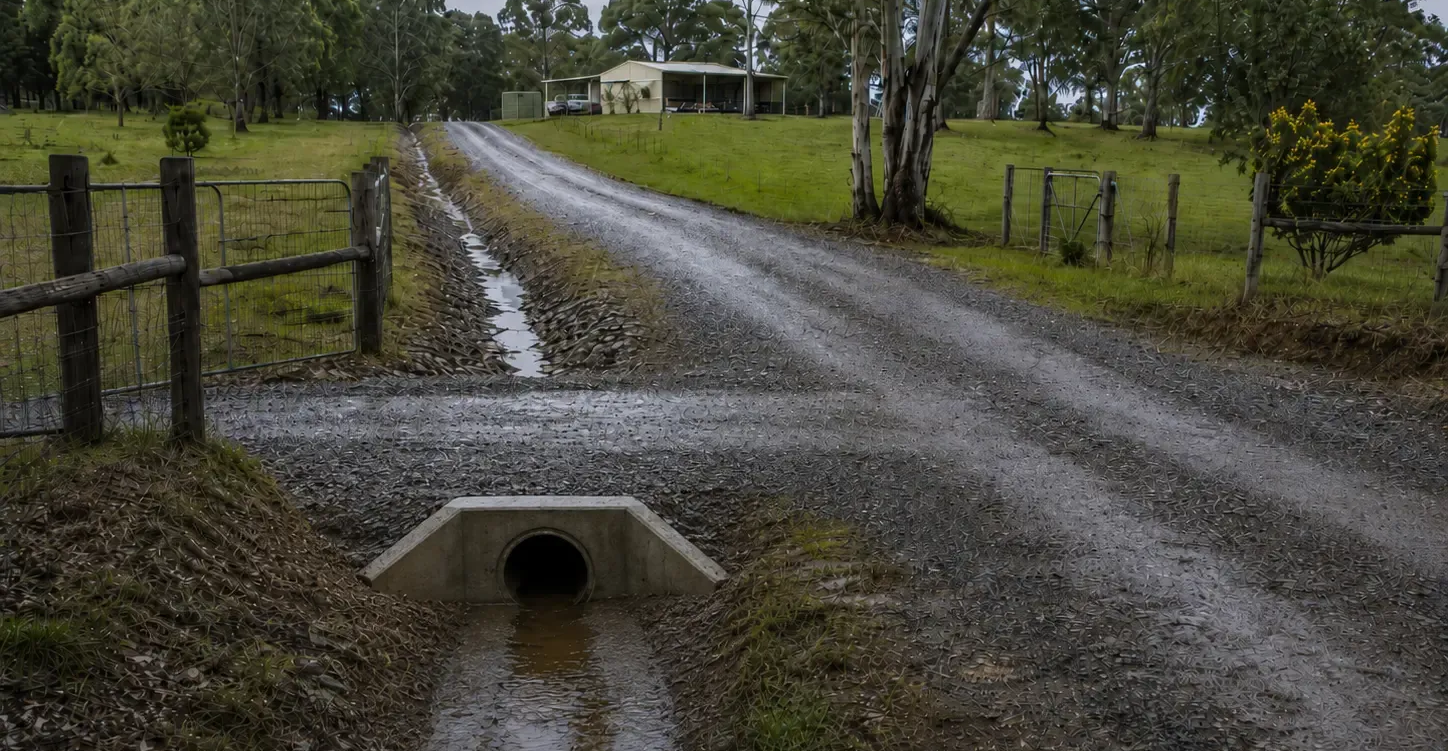
Large farm property entrances and access tracks often need to exist alongside larger roadside or property drains.
Culverts and stable driveway crossings need to accommodate regular vehicle movements while allowing the existing drainage line to continue functioning.
For larger drainage networks across paddocks, farm tracks or acreage properties, see our rural drainage solutions page.
Commonly Asked Driveway Drainage Questions
What is the best way to stop water washing out a gravel driveway?
The water needs to be redirected before the driveway is repaired. Depending on where the runoff comes from, this can involve a side drain, culvert, cross-drainage or reshaping the driveway so water leaves the surface at controlled points instead of travelling along it.
Adding more gravel without correcting the water path usually means the same areas wash out again.
Can you install a new culvert under an existing driveway?
Yes. The driveway can be excavated across the required section, the culvert installed at the correct level and fall, and the crossing rebuilt over the pipe.
Adequate pipe cover and proper compaction are important because the culvert needs to withstand the traffic using the driveway.
When does a driveway culvert need replacing?
A culvert should be replaced when the pipe has collapsed, cracked badly, become significantly deformed or can no longer carry water properly.
A functioning pipe that is simply blocked may only need to be cleared, while a poorly positioned culvert may need to be reset or replaced to correct the drainage level.
Can you stop water flowing into my garage from the driveway?
Yes. Where surface runoff approaches a garage or carport, a correctly positioned grated channel drain can intercept the water before it reaches the building and direct it to a suitable drainage outlet.
The surrounding driveway levels also need to be considered so water actually reaches the drain.
What size culvert do I need for my driveway?
The culvert needs to suit the amount of water using the drain and the dimensions of the existing drainage line. A small pipe can restrict flow and cause water to back up, so sizing should be based on the actual site rather than choosing a pipe simply because it fits beneath the driveway.
Can you fix the drainage and the washed-out section of driveway at the same time?
Yes. Drainage works can include excavation, installation and reinstatement of the disturbed driveway area. The drainage should be corrected first so repaired sections are not immediately exposed to the same uncontrolled runoff.
Driveway Drainage That Works With the Rest of the Property
Driveway problems are sometimes only one part of the drainage picture.
Water arriving at the driveway may have started higher in the yard, come from roof and stormwater discharge, or followed a natural low point through the property. Likewise, water collected beside the driveway still needs somewhere suitable to go.
That is why we look beyond the damaged section itself before deciding what should be installed.
Depending on the property, the solution may connect with existing drains, new pipework, an open drainage line or another suitable discharge point.
You can view our full range of Bundaberg drainage services or see the areas we cover on our service areas page.
Need to Fix a Driveway Drainage Problem in Bundaberg?
Whether water is washing out your driveway, pooling around the entrance or struggling to get through an old culvert, we can help work out a practical way to get it moving in the right direction.
Contact Bundaberg Drainage to discuss driveway drainage and culvert installation or enquire via the form below 👇