French Drain Installation Bundaberg
French drains and subsurface drainage solutions for Bundaberg properties affected by boggy ground, seepage and water that lingers after rain.
A Simple Way to Drain Water From Saturated Ground
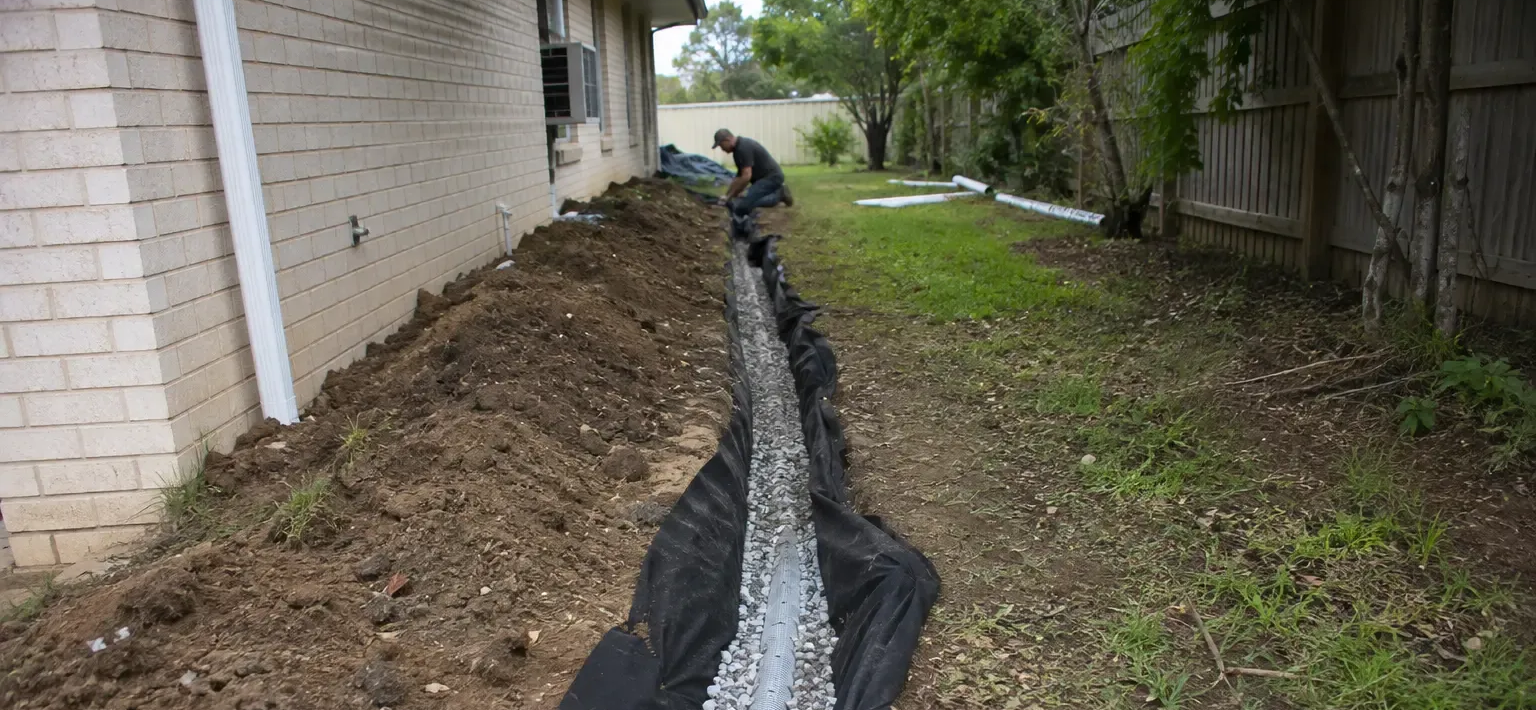
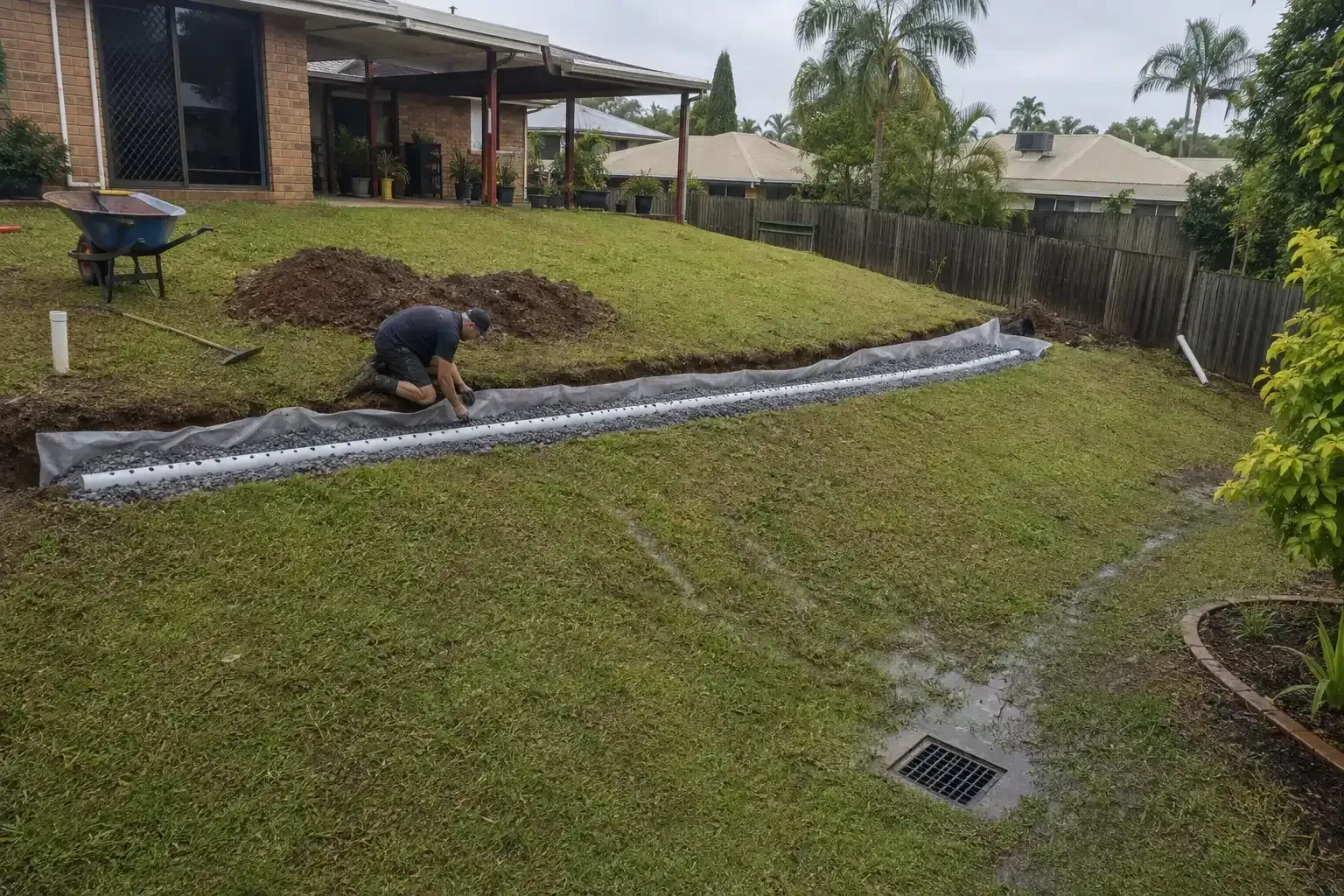
A French drain is a gravel-filled trench designed to collect water moving through the surrounding soil and direct it towards a suitable outlet. Most systems use perforated agricultural pipe surrounded by drainage gravel, with filter fabric helping keep soil and sediment out of the drainage layer.
Unlike a surface drain, a French drain does not rely on water flowing across the top of the ground and into a grate. It works below ground level, making it particularly useful where water is soaking through the soil, collecting around low areas or leaving the ground wet long after rain has stopped.
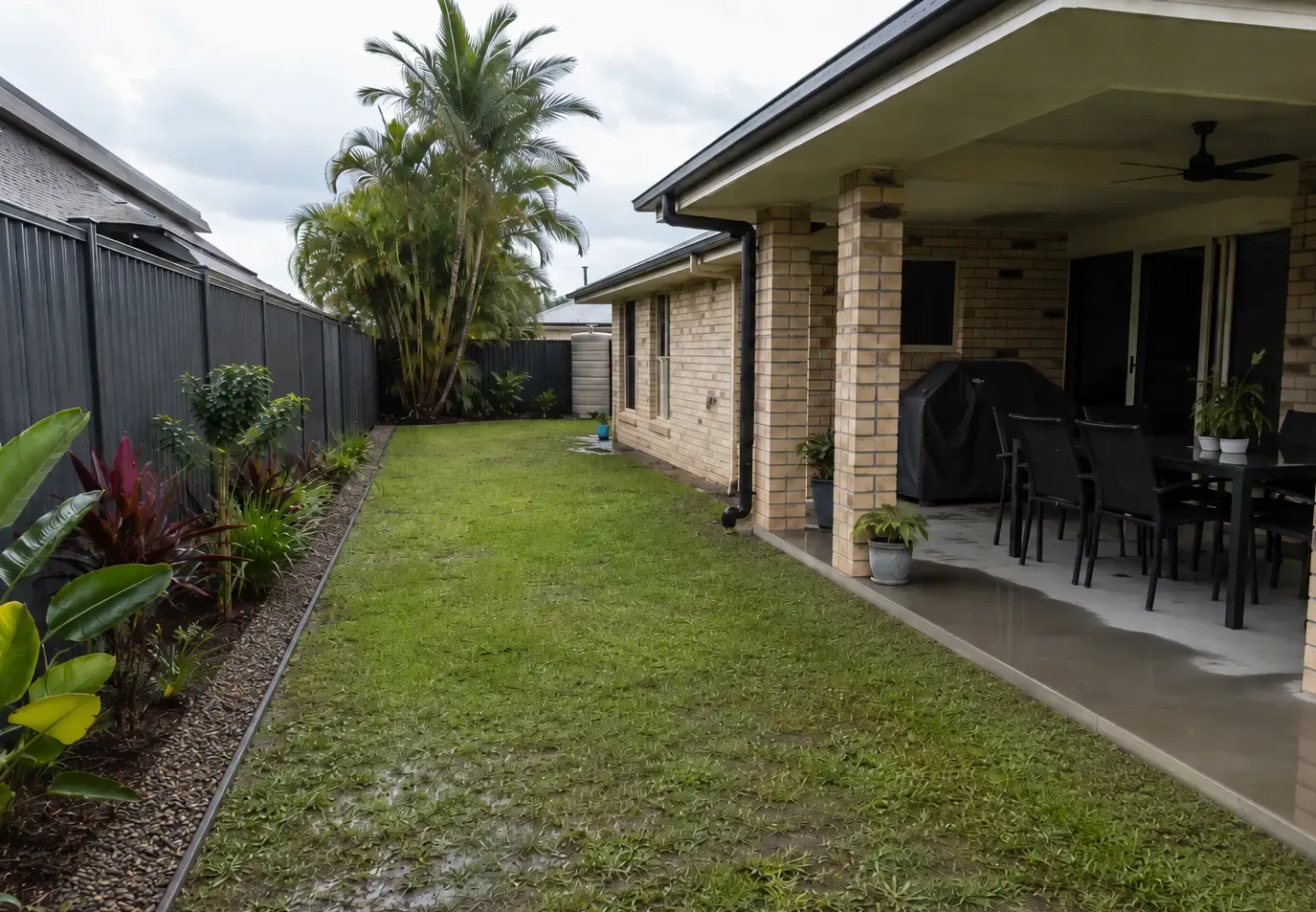
French drains can be installed as a standalone solution or as one part of a larger
yard drainage system
where several different water problems need to be managed.
When Is a French Drain the Right Drainage Solution?
French drains are most effective when the problem is water within the ground rather than large amounts of water rushing across the surface.
Common applications include:
Boggy Lawns & Wet Ground
Ground that remains soft or waterlogged well after rain can indicate that water is not moving away through the soil effectively. A French drain can intercept this water and provide a controlled drainage path.
Side Yards Between Homes & Boundaries
Narrow side areas can stay wet where there is limited sun, poor fall or nowhere for subsurface water to escape. A correctly positioned French drain can help dry the area without relying on a large exposed drain.
Seepage From Higher Ground
Water moving through soil from an elevated section of a property can continually feed a lower area. Installing a French drain across the path of that seepage can intercept the water before it reaches the problem area.
Around Retaining Walls & Landscaped Areas
Where water builds up behind or around retaining structures and garden areas, subsurface drainage can help relieve persistent moisture and move it towards an appropriate discharge point.
French drains are not the answer to every wet yard. Where the main issue is concentrated surface runoff, overflowing roofwater or water entering from a driveway, another type of drainage may be more effective.
French Drain, Surface Drain or Stormwater System?
Choosing the right drainage starts with identifying where the water is coming from.
A French drain is designed primarily for water moving through saturated soil. Surface drains and grated channels collect water flowing across hard or landscaped surfaces, while stormwater pits and pipework are used to carry larger and more concentrated flows.
For example, a wet lawn that remains saturated for days may suit a French drain. Water rushing across a paved area during a storm is more likely to need surface collection. Roofwater and larger connected drainage systems generally fall under stormwater drainage rather than a standalone French drain.
Using the wrong drainage type can simply move the problem without fixing it. The layout needs to suit the source of the water, the fall of the property and where that water can ultimately be discharged.
Why Some French Drains Stop Working
A correctly built French drain should allow water to move freely through the gravel and into the drainage pipe. Problems usually occur when the system has been poorly designed, installed with unsuitable materials or has nowhere effective to discharge.
Common issues include:
Fine Soil Clogging the Gravel
Without appropriate separation between the surrounding soil and drainage aggregate, sediment can gradually block the flow.
Insufficient Fall
A drain that has no effective path towards an outlet can remain full of water rather than carrying it away from the problem area.
Incorrect Drain Position
The drain needs to intercept the water before it reaches the problem area. Installing it simply where the ground looks wet rarely addresses the source.
Using it for Surface Runoff
French drains are not designed to replace all surface drains or stormwater pits. Concentrated runoff may need to be captured before it enters the ground.
If the entire yard is experiencing pooling, poor falls or several different water-flow issues, our yard drainage solutions are generally the better place to start.
Building a French Drain That Can Keep Working
A French drain is a relatively simple system, but the details of the installation matter. A shallow trench filled with the wrong material or laid without sufficient fall can clog, hold water or fail to drain the area effectively.
Our installations typically involve:
- Identifying the source and direction of the unwanted water
- Determining where the drain needs to intercept that water
- Excavating the drainage trench to the required line and depth
- Lining the trench with suitable filter fabric
- Installing perforated drainage pipe where required
- Surrounding the pipe with free-draining aggregate
- Maintaining appropriate fall towards the outlet
- Completing the surface to suit the surrounding area
Where substantial excavation is required, our trenching and excavation services allow the drainage and earthworks to be handled as one coordinated job.
The finished drain may remain as an exposed gravel feature or be incorporated more discreetly into the surrounding yard, depending on the location and purpose of the system.
Subsurface Drainage for Homes and Larger Properties
Drainage problems are not always obvious during dry weather. A section of lawn may appear fine until extended rain leaves it saturated, or a side yard may progressively become softer as water moves through the surrounding soil.
French drains provide a relatively unobtrusive way to manage these problems because the drainage system sits mostly below the surface.
We can install subsurface drainage for:
- Suburban homes
- Backyard and side-yard problem areas
- Acreage properties
- Sheds and outdoor work areas
- Landscaped areas
- Retaining wall surrounds
- Sections of ground affected by seepage
- Larger property drainage projects
We service a wide area across the Bundaberg, Wide Bay and Burnett regions. You can find out more about the specific areas we service on the Bundaberg drainage service areas page. Alternatively, contact us to ask.
Commonly Asked French Drain Questions
What is a French drain?
A French drain is a gravel-filled trench that collects water from saturated soil and directs it away from the affected area. Most modern installations use perforated ag pipe within the drainage gravel to provide a clear path for the collected water.
Do French drains have to use ag pipe?
Not every gravel drainage trench requires pipe, but perforated ag pipe is commonly used because it provides a more effective route for collected water to travel towards the outlet. For most residential French drain installations, we would expect the system to include suitable drainage pipe.
Will a French drain fix a boggy backyard?
It can if subsurface water is causing the boggy ground. If the yard is wet because surface water is pooling due to poor levels or runoff, reshaping the ground, surface drainage or a combination of solutions may be required instead.
Can a French drain take water from downpipes?
A French drain is primarily intended to collect water from the surrounding soil. Concentrated roofwater from downpipes is normally better handled through dedicated stormwater drainage rather than simply discharging it into a French drain.
How deep does a French drain need to be?
There is no single depth used for every installation. The trench needs to be deep enough to intercept the water causing the problem while still allowing the system to drain towards its outlet. Its depth is therefore determined by the site rather than using one standard measurement.
Can the French drain be covered with soil and grass?
Some subsurface drainage systems can be finished beneath the surrounding surface, while others perform better with a free-draining gravel finish above the trench. The final treatment depends on how quickly water needs to enter the drain and how the surrounding area is used.
How long should a French drain last?
A properly constructed drain using suitable pipe, clean drainage aggregate and filter fabric can remain functional for many years. Keeping fine soil and sediment out of the drainage layer is one of the most important factors in its long-term performance.
Is a French drain the same as a trench drain?
No. A French drain collects subsurface water through gravel and perforated pipe below ground. A trench or channel drain normally has a grated opening at the surface and is designed to collect water flowing across areas such as driveways, paths or paved surfaces.
Collected Water Still Needs Somewhere to Go
A French drain cannot simply collect water indefinitely. Once the water enters the drainage trench, it needs a suitable path away from the affected area.
That may involve connecting the subsurface drain into other drainage infrastructure or directing water towards an appropriate lower point on the property, depending on the site and the existing drainage arrangement.
This is why simply digging a gravel trench through the wettest section of a yard is not always enough.
The complete system needs to consider:
- Where the water enters the ground
- Where it is being intercepted
- The available fall
- The capacity of the drainage trench
- The final outlet
Where the property has several different drainage issues, a French drain may form just one part of a wider solution incorporating surface drainage, stormwater infrastructure or earthworks.
Need a French Drain Installed in Bundaberg?
If wet ground, seepage or saturated areas are becoming an ongoing problem around your property, we can assess the water flow and install a drainage solution suited to the site.
Call, message or request a quote below for French drain installation in Bundaberg or surrounding areas.